丨Core Functions
- High-precision Coating System: Gravure roll coating with adjustable adhesive / silicone coating weight and uniform layer. Compatible with high-solid solvent adhesive and silicone coating, meeting requirements for aluminum foil lamination and paper release coating production.
- Multi-zone Independent Temperature-controlled Oven: Segmented hot air drying with independent wind speed & temperature adjustment to fully evaporate solvent, minimize residual solvent and ensure proper curing of silicone layer.
- Servo Tension Control System: Independent servo closed-loop tension control for unwinding, lamination and rewinding, preventing stretching and wrinkling of thin films, aluminum foil and thin glassine paper.
- Lamination Nip Unit: Heated lamination roller with adjustable pressure to ensure firm bonding of multi-layer substrates and stable peel strength. Standalone silicone coating mode available for paper release coating without lamination.
- Online Edge Guiding: Photoelectric web guiding for automatic edge alignment, neat finished rolls and less waste.
- PLC & HMI Control System: Multiple product recipes storable, real-time monitoring of line speed, tension, temperature and coating parameters for adhesive or silicone.
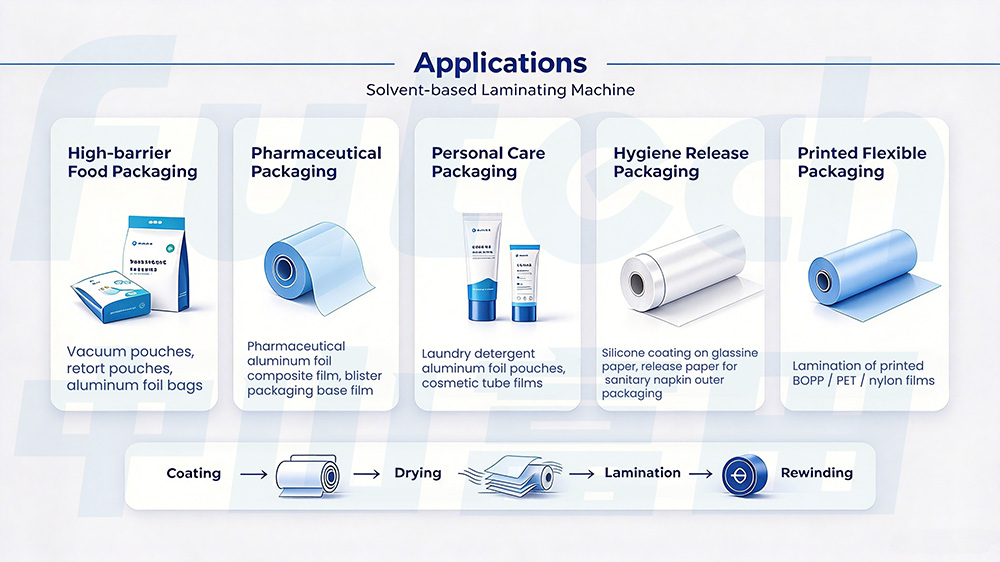
丨Applications Fields
- High-barrier Food Packaging: Vacuum pouches, retort pouches, aluminum foil bags, frozen food bags, snack packaging bags
- Pharmaceutical Packaging: Pharmaceutical aluminum foil composite film, blister packaging base film
- Personal Care Packaging: Laundry detergent aluminum foil pouches, cosmetic tube films, fragrance packaging bags
- Hygiene Release Packaging: Silicone coating on glassine paper, release paper for sanitary napkin outer packaging, underpad outer packaging release substrate
- Industrial Packaging: Aluminum-plastic composite film, moisture barrier film, metallized film lamination
- Printed Flexible Packaging: Lamination of printed BOPP / PET / nylon films
丨Core Advantages
- High Lamination Strength: Suitable for hard-to-bond substrates such as aluminum foil and nylon. Heat-resistant, puncture-resistant with excellent barrier property.
- 2-in-One Machine: Supports both solvent-based lamination and silicone coating on paper, to produce release paper for sanitary napkin outer packaging and expand hygiene product lines.
- Proven & Stable Process: Mature technology with high tolerance, ideal for thick film, multi-layer high-barrier jobs and glassine paper silicon coating orders.
- Wide Substrate Compatibility: Can laminate aluminum foil, metallized film, PET, BOPP, PA, glassine paper and other films & paper.
Note: Exhaust gas treatment system is required to handle organic solvent vapor generated during drying.
丨FAQ
Q1: What advantages does dry laminator have compared with solventless machine?
A1: Dry laminator has stronger lamination strength, excellent performance for aluminum foil, nylon and high-barrier film. It supports silicone coating on glassine paper for sanitary napkin release paper, wider material compatibility.
Q2: What materials are suitable
A2: PET, BOPP, PA nylon, aluminum foil, metallized film, glassine paper, CPP. Ideal for high-barrier food pouch, pharmaceutical packaging and hygiene release paper.
Q3: What is the typical production speed
A3: Normally 70–200 m/min, depends on substrate thickness and drying condition.
Q4: Can we use it for sanitary napkin outer release paper?
A4: Yes. It can coat silicone on glassine paper to make release substrate for sanitary napkin and underpad outer packaging.


